


A Christian Perspective: The Impact of Adult Education on Civic Engagement

Updated: May 7

The role of adult education in the promotion of civic engagement has been the cornerstone of democratic society in America for eons (Teslim, 2024). In fact, adult education is essential in promoting civic engagement, helping to develop active, informed, and responsible citizens (Ballard, 2018). Furthermore, civic engagement is vital for the operation of democratic societies, and adult education equips individuals with the tools and knowledge needed to participate effectively in civic life. According to Appleby et al., (2008), civic engagement also equips adults to participate in activities such as voting, volunteering in the community, and participating in public meetings. Through an informal lens of education, adults can learn unique critical thinking to cultivate civic mindedness in populations that could be otherwise marginalized (Barnes, 1984).
The development of critical thinking in education prepares individuals for participation in democratic society (Bottmeyer, 2023).
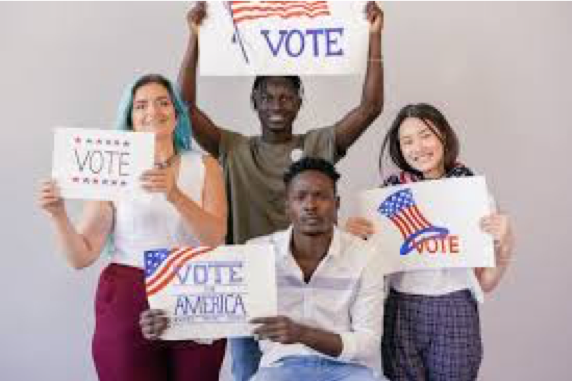
Learning to understand rights and responsibilities while learning how government and civic institutions work, can be empowering. In order to foster social inclusion, adults from diverse backgrounds can learn how to promote social cohesion, with a shared sense of purpose (Martinson & Minkler, 2006).
Taking a course in United States government, such as political science, can prepare adult learners for understanding U.S. history (Hubert, 2020). In support of civic integration, individuals can learn how to become integrated into their communities by learning about expectations as potential parents, citizens, and workers (Jones-Clinton, 2011). With civic integration learning, adults can learn how to engage in solving needs within their communities and how to navigate the education system (Hauser, 2000).
Participation in community life such as civic governance correlated to civil organizations, places the adult learner within the community at the heart of economic, social, and future political debates (Egerton, 2002). Therein, adult citizens need to be equipped with the skills and tools to achieve inclusive decisions. In fact, adult education requires building up lasting critical thinking skills to become involved in strategic civic empowerment (Hayes, 1999).

The right to a quality education is something that every American must recognize as a fundamental right. Sustainable development goals involve education for sustainable development, literacy, and qualified teachers (Present, 2010). Additionally, the acquisition of new skills, entrepreneurship is important as a part of global citizenship. Learning and adult education are at the heart of inclusive, and sustainable development strategies (Schugurensky & Myers, 2003). These rights also tie in directly with opportunities which correlate to social and economic empowerment.
In recent years, studies have shown there is a decline in political activism amongst young adults (Tate et al., 2011). Adults with at least one year of college held a slightly higher voter participation (Hayes, 1999). In fact, adults who had at least some college had greater rates of voter participation amongst young adults (Teslim, 2024). However, on a national average, the decline in civic engagement and voting adults had deteriorated significantly since 1970 (Tate et al., 2011). This disparity of civic engagement in the 2000s compared to the 1970s points to a deeper problem. In fact, there is evidence that education suggests a greater presence in the predictor of voting (Nuangchalerm, 2014).

This leads to an important question that requires a solution. How can the neglect of critical thinking and democratic values be overcome by the promotion of civic engagement in adult education? Through a thorough investigation into the background of how our founding fathers preceded the importance of education to promote civic engagement, as well as a Christian integration into the proponents of education and responsibility of citizens, proposed solutions will shed light on how the importance of education/critical thinking can promote civic engagement for all citizens.
Background
One of the nation’s earliest founding documents, the Declaration of Independence (US, 1776) espouses, “We hold these truths to be self-evident, that all men are created equal, that they are endowed by their Creator with certain unalienable rights, that among these are life, liberty, and the pursuit of happiness.” As Barnes (1984) asserts, all men include children, women, and men from all tribes, and all walks of life. A political philosophy penned by Thomas Jefferson points to the influence of how education policy affects the future. While some interpretations of this statement tend to be liberal, the spirit of this statement also refers to all men legally, morally, and spiritually (Lerner et al., 2014). While the term “created equal” translates into the implication that all men have access to education, the education or pursuit of

happiness implies education is not just limited to a certain group of people. In other words, adults as well as their children can choose to become educated to increase their happiness (Barnes, 1984). Clearly, the Declaration of Independence points toward the importance of education in the pursuit of happiness.
Educational reforms have provided a rich historical part of legislative history in our nation (Martinson & Minkler, 2006). From the earliest American leader, Thomas Jefferson, came the earliest founding document. The Declaration of Independence suggested an educational system be established and controlled by the government (Williams, 2006). It should also be free of any religious bias. Hence, all people regardless of station, race, or creed could participate in the establishment of education (Pulliam, 1994). Furthermore, Henry Bernard and Horace Mann believed education was the greatest equalizer of the people (Williams, 2006).

As early as the 18th century, evidence of adult education in the U.S. provided evidence of night school for adults (Williams, 2006). This included citizenship/Americanization classes for immigrants and part-time classes. These classes were forerunners of the Federal Adult Education Movement and the notion of self-improvement was birthed (Schugurensky & Myers, 2003). The notion of self-improvement was fashioned by Benjamin Franklin, a statesman, signer of the Declaration of Independence, inventor and founder of an association known as “Janto.” Janto began as an association focused on self-improvement (Present, 2010). Mainly, the middleclass at the time seeking mental refinement, and programs for the retired. Since governments were meant to help citizens resolve economic and social problems, it was thought society could renew and improve itself through education (Kandel, 1930).

The manifestation of the “Wisconsin Idea” taught problem solving combined with research (Edwards-Fapohunda, 2024). This began as the ground for real world problem solving and became established by the Morrill Act of 1862 (Edelson, 2000). When the Morrill Act was established, it first began as a bill of educational rights. This established public lands offered to colleges for mechanical arts and agriculture (Jones-Clinton, 2011). According to Edelson, (2000), in 1862, the principles that embraced colleges as popular establishments, were known as the Morrill Land Grand College Act. Unfortunately, an insufficient number of students caused the school to attract adults. To this day, a vast majority of colleges are focused on serving adults (Pulliam, 1994). Earlier efforts of congress to support education were designed to meet industrial and vocational education needs (Chan et al., 2014). Federal funds for agricultural experiments by the Hatch Act of 1887 provided programs for farmers.
During World War I, the U.S. government began to train numerous technicians (Darling-Hammond, 2006). However, due to inactivity during the depression, industrial shortages resulted in trained engineers and technicians. In 1940, the National Defense Training Program provided education for at least seven million workers during World War II (Cross, 1982).
In 1958, the National Defense Education Act provided vocational training for skilled technical or semi-technical occupations (Campbell, 2009). It was clear that efforts to improve welfare of the U.S. and to increase equality of opportunities were passed through a New Deal legislation during Franklin D. Roosevelt’s administration (Egerton, 2002). Subsidizing salaries for teachers and programs involving adult training to build skills and provide loans began as a trend which has continued through the Economic Opportunity Act of 1964. This authorized Title II funds for the authorization of adult education (Pulliam, 1994).
In 1968, the Educational Opportunity Act was passed. This was based upon the premise envisioned by Lyndon B. Johnson, president at the time (Appleby et al., 2008). Lyndon Johnson created the concept of War on Poverty.

President Lyndon Johnson envisioned a society without discrimination or poverty (Barnes, 1984). This society would also provide equal jobs and educational opportunities. These were major educational milestones which began as reforms to include the Higher Education Act of 1965. These acts represented an unprecedented commitment of the U.S. government to ensure Americans had equal job opportunities and equal public education opportunities (Present, 2010).
Christian Integration Connection
According to Matthew 5:13-16 You are the salt of the earth and the light of the world, called to shine brightly and influence others for good (Barker, 1985). During the times of Jesus, salt was a valuable and essential substance utilized for preserving food and flavor. Not only did Jesus liken His disciples to salt, He encouraged them to be the preservative of flavor implying they needed to be flavor enhancers by influencing society by preserving what was good, adding a positive influence to the world/surroundings in their environment. Jesus also described His followers as the “Light of the world,” just like a city built on a hill that cannot be hidden. Jesus expects His follower to shine brightly, to demonstrate their good works and attract others to the Glory of God.

By demonstrating God’s goodness to others, while glorifying God, this can be done by living a life of faith and good works. This can also inspire others to seek God. The importance of contributing to the common good and caring for our neighbors, constitutes a desire to become involved in the civic engagement of activities that promote social justice, improve community well-being, while also addressing societal problems.
According to Galatians 6:9-10, Let’s not become weary in doing good, for at the proper time, we will reap a harvest if we do not give up (Barker, 1985). This verse elicits the importance of perseverance. In other words, it is essential to persevere in doing good. Doing good can often times be discouraging and tiresome. However, the assurance to believers is that their efforts will eventually bear much fruit. Bearing fruit also connects to the concept of reaping as a metaphor the eventual reward or harvest that comes from faithfulness in promoting good. For the believers that do not give up, doing good to all people, especially to the family of believers, the concept of doing good urges believers to extend kindness to everyone.

There is a special emphasis on believers to highlight the importance of prioritizing the needs of the community to show love and support to those who share faith, signifying the close-knit relationship and mutual responsibility existing amongst Christians. Henceforth, by the encouragement of consistent good works, implying a lifelong commitment to service by positive impact, aligns with adult education and civic engagement. Through the encouragement to persevere in doing good, a call to actively participate in the betterment of society is made. This also ties in with principles of adult education, where learning is linked to social responsibility and action, civic engagement, and active participation in public life. The need for a sustained effort in the activation of learning often focuses on experiential learning, where citizens can apply knowledge and skills to real-world situations. Learning should not be confined to the classroom or library, but should also extend to communities and personal relationships.
According to 1 Corinthians 12:7, To each is given the manifestation of the Spirit for the common good (Barker, 1985). Each Christian has been given a unique spiritual gift. This gift is a manifestation of the power of the Holy Spirit. This is intended to serve the needs of the entire Christian Community. These gifts are not for any personal gain, rather to elevate each individual above the other, to build up and edify the church. The manifestation of the Spirit refers to an outward display of the manifestation of the power of the Holy Spirit to transform a believers life.

Spiritual gifts are not meant to be selfish or to enhance one’s own position, rather to contribute to the overall well-being and growth of the church. They are designed to build up and encourage others. While each believer receives a gift, this contributes to the richness and diversity of the ministry of the church. In other words, the ultimate purpose of spiritual gifts is to serve others; while also promoting growth and edification to the entire body of believers. They are meant to be used for the glory of God and benefit all of His people.
Building up the community extends far beyond the church. 1 Corinthians 12:7 can also be applied to the importance of civic engagement. By utilizing spiritual gifts to serve others, people can contribute to the overall well-being of their community by fostering a sense of shared purpose and unity. Individuals can learn to become empowered to recognize their unique gifts and responsibilities for the benefit of others.

This can also translate into a sense of civic responsibility, encouraging the spiritual gifts to be shared to participate in local issues to work toward positive change and outcomes within their communities. All members of the church are interconnected and their gifts are meant to be extended to civic life, suggesting individuals should work together to cooperate by addressing community needs.
Proposed Solutions
How can the neglect of critical thinking and democratic values be overcome by the promotion of civic engagement in adult education? In order to overcome the neglect of critical thinking and democratic values inhibiting civic engagement, a multifaceted approach is necessary. This includes the integration of civic education across subjects, the development of comprehensive curricula, while also providing necessary training for educators (Ballard, 2018). Furthermore, the encouragement of interactive teaching methods will necessitate the involvement of challenges such as limited resources, traditional attitudes, and political polarization (Appleby et al., 2008).

According to Campbell (2009), it is necessary to develop a well-structured curriculum of civic education that covers a broad range of topics such as democratic principles, civic responsibility, and critical thinking. With the integration of civic education within various subjects, a holistic learning experience is necessary to overcome separation of topics (Ajaps, 2019). Additionally, by utilizing interactive teaching methods such as role-playing, discussion to engage students to promote active learning could be highly effective (Appleby et al., 2008).
Fostering civic engagement also involves levels of community involvement (Richard et al., 2017). Such as, opportunities for adult learners to become involved in advocacy and volunteerism (Lerner t al, 2014). Providing opportunities for students to engage in research on important issues could inspire them to take action based upon their findings (Schugurensky & Myers, 2003).

In order to overcome neglect of critical thinking in promoting civic engagement, three main issues need to be addressed. Through the strengthening of critical thinking, promoting democratic values, and encouraging active citizenship, individuals can become empowered to engage in meaningful civic action, make informed decisions, and learn how to advocate for their own rights and the rights of others (Present, 2010).
Strengthening Critical Thinking
Adult education can assist in the equipping of skills to analyze information, identify biases in media, and evaluate arguments (Richard et al., 2017). It is important to learn how to discern accurate information from misinformation (Nuangchalerm, 2014). Critical thinking is necessary for higher level thinking skills to enable individuals to be effective decision makers (Hubert, 2020). Aristotle states “It is the mark of an educated mind to be able to entertain a thought without accepting it.” In other words, it is important not to accept information at face value (Herbert, 2020). By critically evaluating underlying assumptions and beliefs, it is also possible to identify arguments. By analyzing data, an adult can look for trends and patterns, to see if any potential for biases arise from information (Pulliam, 1994). Furthermore, the practice of active listening by paying close attention

to conversations, it is possible to ask clarifying questions. By the consideration of diverse perspectives, it is possible to seek different viewpoints, and engage accordingly in discussions (Jones-Clinton, 2011).
Learning how to confront personal bias is important in the acknowledgement of weaknesses or blind spots (Lerner, et al., 2014). These biases can influence the wrong level of thinking. Learning how to develop critical skills can include puzzles, solving real world problems and reflecting on ones’ thought process (Edelson, 2000). To identify areas necessary for improvement, adults must learn from mistakes made in approaches that do not lead to truth or accurate information (Edwards-Fapohundra, 2024). According to Hubert (2020), always be willing to seek the truth, even if it is painful or inconvenient. “Oftentimes, ignorance can be dangerous, especially if it involves hiding from important facts or details necessary to make informed decisions,” (p. 34).

By evaluating information from various credible sources, adults can learn to grasp a comprehensive understanding of complex issues (Darling-Hammond, 2006)s. Such as, learning about the U.S. government and political systems. This will in turn lead to the knowledge of civic rights, and understanding the history of individual communities (Edelson, 2000). Creating space for meaningful discussion on important civic issues, participants can be encouraged to share diverse and unique perspectives with one another (Chan & Reynolds, 2014). Through the implementation of these strategies, adults can learn to develop a deeper understanding of the civic process, therefore beginning to more actively contribute to a more informed participatory democracy Campbell, 2009).
Promoting Democratic Values
Educators can promote democratic values to encourage civic engagement by equipping adults to participate meaningfully in the democratic process (Ardoin et al., 2022). This could include exploring perspectives and engaging in open/critical dialogue in the classroom. It is imperative for Americans to understand the constitution and how the government operates (Ballard, 2018). Learning to understand the Constitution, structure of government, and various roles of the executive branches teaches citizens to learn about their rights and responsibilities as citizens (Campbell, 2009). Students need to understand the principles of democracy, including how to vote, participate in elections, and holding elected officials accountable (Tate et al., 2011).

With the development of strong communication skills, educators can teach adults how to effectively communicate their viewpoints (Williams, 2006). For instance, fostering environments where adults are encouraged to listen and respect varying opinions of others, even if they disagree is a process of valuing open and honest dialogue, even when there are disagreements (Pulliam, 1994). Students who learn about government and civics can learn how government roles are sustained (Edwards-Fapohunda, 2024). Americans must learn to be educated on what their role is as a responsible citizen. Furthermore, in order to sustain government systems, Americans need to be educated on their role in democracy to make responsible decisions (Cross, 1982). These decisions could determine the future of America (Darling-Hammond, 2006).
America is comprised of diverse cultures and many linguistic, historical and ethnic aspects of communities and peoples (Meyer et al., 2022). As individuals learn to embrace cultural differences, adults can learn to share their own backgrounds to describe unique experiences. Through this process, students learn to embrace diversity (Martinson & Minkler, 2006). Listening to the backgrounds of others,

also begins to allow global perspectives to break down barriers that could have otherwise created conflicts (Nuangchalerm, 2014). When teachers embrace a variety of cultural perspectives into the classroom, there is room for social growth and maturity (Hubert, 2020). Students can also gain understanding of historical and cultural experiences of others (Ajaps, 2019). Opportunities to share an adults cultural voice provides multiple immigration viewpoints, promoting empathy (Ballard, 2018).
Introducing the democratic process to Americans is essential at an early age (Ardoin et al., 2022). Teachers can work to take active roles in allowing mock government programs and activities (Alfirevic et al., 2023). This enables students to participate in elections, debates, and even the legislative process.

This consequently enables individuals to experience how democracy and politics may directly affect their lives (Schugurensky & Myers, 2003). Another way to instill democratic process is for teachers to prepare the classroom for current national issues in a debate panel. While allowing students to experience the democratic process, educators can keep students abreast of pressing problems in their own communities (Tate et al., 2011).
Encouraging Active Citizenship
Active citizenship can be greatly encouraged in America through education (Richard et al., 2017). By equipping individuals with the skills, knowledge and values to participate in the democratic process, there are various ways to encourage adults to question, evaluate, and analyze what they hear to form their own opinions (Pulliam, 1994). Furthermore, classrooms can be utilized to promote a global awareness of society and understanding of diverse cultures (Appleby et al., 2008). Classrooms can model what is known as everyday democracy by being spaces where democratic principles are practiced Campbell, 2009). This could involve discussions on student government and collaborative projects. By encouraging active leadership, teaching adults to embrace leadership skills that are inclusive, focused on serving the common good, a shared sense of responsibility can be fostered (Hayes, 1999).

Additionally, schools can partner with community leaders and local organizations to provide adults with opportunities for diverse experiences, perspectives and having access to quality materials/resources (Lerner et al., 2014). Some schools incorporate service learning by engaging in community projects to engage in real-world civic involvement. Some students choose to become involved in student council where valuable experience in leadership/decision making can be learned (Jones-Clinton, 2011). Building a positive environment where students feel valued and safe is crucial to foster responsibility in civic engagement (Alfirevic et al., 2023).
Citizens in America need to participate in a form of civics education that is relevant and resonant (Bottmeyer, 2023). This requires teachers to be accomplished and experienced, who know their material well, and who know how to actively engage individuals in the learning process (Campbell, 2009) Students who understand American democracy best are those whose teachers are fully educated and not afraid to involve students in controversial discussions (Alfirevic et al., 2023). In an era where conspiracy theories and fake news are rampant, students must learn to evaluate accurate sources of information and recognize evidence to support ideas and advocacy positions (Teslim, 2024). If citizens do not know how to separate opinions from facts, no policy can give wisdom to its citizens (Present, 2020).

A unification of foundational knowledge and civic values can represent action civics (Schugurensky & Myers, 2003). The perception that everyday adults can’t influence U.S. government, with only privileged level of power to change policies, can create roadblocks to participatory democracy (Cross, 1982). If students can begin to recognize problems within their own communities and schools, find solutions to solve them, they can connect to policy makers to persuade them to take action (Hauser, 2000). If students can’t identify problems or consider options to solve them, then it becomes difficult to take action (Hauser, 2000). However, attracting allies to expand support, devising plans to engage with new and traditional media, coupled with fiscal solutions, students can begin to move toward resolutions to manage the problem at hand while gaining confidence to embark upon a lifetime of action civics (Ballard, 2018).
Conclusion
Education in America and the promotion of civic engagement has been for eons, the cornerstone of American democratic society (Teslim, 2024). The development of critical thinking in education prepares individuals for participation in democratic society (Bottmeyer, 2023). Civic engagement also equips adults to participate in activities such as voting, volunteering in the community, and participating in public meetings. Participation in civic governance correlated to civil organizations, places the adult learner within the community at the heart of economic, social, and future political debates (Egerton, 2002).
Adult citizens need to be equipped with the skills and tools to achieve success. Adult education requires building up lasting critical thinking skills to become involved in strategic civic empowerment (Hayes, 1999). The right to a quality education is something that every American must recognize as a fundamental right. However, studies in recent years show, there is a decline in political activism (Tate et al., 2011).
Educational reforms over the years have provided a rich historical part of legislative history in our nation (Martinson & Minkler, 2006). From the earliest American leader, Thomas Jefferson, came the Declaration of Independence. This suggested an educational system be established and controlled by the government (Williams, 2006). It should also be free of any religious bias. Hence, all people regardless of station, race, or creed are eligible to participate in the establishment of education (Pulliam, 1994). Henry Bernard and Horace Mann believed education was the greatest equalizer of the people (Williams, 2006).
According to Galatians 6:9-10, it is essential to persevere in doing good. Doing good can often times be discouraging and tiresome. However, the assurance that bearing fruit also connects to the concept of reaping will reward or harvest that comes from faithfulness in promoting good. For believers that do not give up, especially to the family of believers, the concept of doing good urges believers to extend kindness to everyone. Building up the community extends far beyond the church. By utilizing spiritual gifts to serve others, people can contribute to the overall well-being of their community by fostering a sense of shared purpose and unity.
According to Campbell, (2009), it is necessary to develop a well-structured curriculum of civic education that covers a broad range of topics in civics. Adult education can assist in identifying biases in media, and evaluating arguments (Richard et al., 2017). It is important to note how to discern accurate information from misinformation (Nuangchalerm, 2014). America is comprised of diverse cultures and many linguistic, historical and ethnic aspects of communities and peoples (Meyer et al., 2022). As individuals learn to embrace cultural differences, adults can learn to share their own backgrounds. Attracting allies to expand support, adults can begin to move toward resolutions to manage the problem at hand while gaining confidence to embark upon a lifetime of action civics (Ballard, 2018).

References
Ajaps, S. (2019). Increasing civic engagement through civic education: A critical consciousness theory perspective. Journal of Culture and Values in Education, 4(1), 64-87. https://doi.org/10.46303/jcve.2020.2
Alfirevic, N., & Arslanagic, M., & Lep, Z. (2023). The role of higher education and civic involvement in converting young adults’ social responsibility to prosocial behavior. Scientific Reports, 1-11. https://doi.org/10.1038/s41598-023-29562-4
Appleby, J., Brinkley, A., Broussard, A., McPherson, J., Richie, D. (Eds.) (2008): The American Vision. Columbus: McGraw-Hill.
Ardoin, N.M., & Bowers, A.W., & Gaillard, E. (2022). A systematic mixed studies review of civic engagement outcomes in environmental education. Environmental Education Research, 29(1), 1-26. https://doi.org/10.1080/13504622.2022.2135688
Ballard, P.J. (2018). Impacts of adolescent and young adult civic engagement on health and socioeconomic status in adulthood. Journal of Child Development, 1-17.
Barker, K. (Ed.). (1985). The NIV study Bible: New International Version. Zondervan.
Barnes, G. (1984): The American University: A World Guide. The USA: ISI Press. Cross, K. P. (1982): Adults as learners. San-Francisco: Jossey-Bass.
Bottmeyer, K. (2023). Perception vs. reality: The influence of civic experiences in high school
on adult civic engagement. Dominican Scholar, 1-47.
Campbell, D.E. (2009). Civic engagement and education: An empirical test of the sorting model. American Journal of Political Science, 53(4), 771-786.
Chan, W.Y., Ou, S.R., & Reynolds, A. (2014). Adolescent civic engagement and adult outcomes: An examination among urban racial minorities. National Library of Medicine, 43(11), 1829-1843. https://doi.org/10.1007/s10964-014-0136-5
Cross, K. P. (1982). Adults as learners. San-Francisco: Jossey-Bass. Darling-Hammond, L. (2006): Powerful teacher education: lessons from exemplary programs. San-Francisco: Jossey-Bass.
Darling-Hammond, L. (2006): Powerful teacher education: lessons from exemplary programs. San-Francisco: Jossey-Bass.
Edelson, P. (2000): Adult education in the USA. Issues and trends. www.stonybrook.edu/spd/ dean_papers/edelson_monograph.pdf. A
Edwards-Fapohunda, M.O. (2024). The role of adult learning and education in community development: A case study of New York. IRE Journals, 8(1), 437-454.
Egerton, M. (2002). Higher education and civic engagement. British Journal of Sociology, 53(4), 603-620. https://doi.org
Hauser, S.M. (2000). Education, ability, and civic engagement in the contemporary United States. Social Science Research, 29, 556-582.
Hayes, E. (1999): Policy Issues That Drive the Transformation of Adult Literacy. New Directions for Adult and Continuing Education, 83, 3-7.
Hubert, A.G. (2020). Critical Thinking in Civic Education. https://spark.bethel.edu/cgi/viewcontent.cgi?article=1305&context=etd
Jones-Clinton, T. J. (2011): Principals as facilitators of professional development with teachers as adult learners. University of Missouri: St. Louis.
Kandel, I. L. (1930): History of Secondary Education. Boston: Houghton Mifflin.
Lerner, R.M., Wang, J., Champine, R.B., Warren, D.J., & Erickson, K. (2014). Development of civic engagement: Theoretical and methodological issues. International Journal of Developmental Science, 8, 64-79.
Martinson, M., & Minkler, M. (2006). Civic engagement and older adults: A critical perspective. The Gerontologist, 46(3), 318-324. https://doi.org/10.1093/geront/46.3.318
Meyer, K.R., Carpenter, N., & Hunt, S.K. (2022). Promoting critical reasoning: Civic engagement in an era of divisive politics and civil unrest. eJournal of Public Affairs, 2(1), 89-104.
Nuangchalerm, P. (2014). Self-efficacy and civic engagement in undergraduate students: Empirical results of a service-learning program in Thailand. International Journal for Service Learning in Engineering, 9(2), 150-156.
Present, W. (2010): Education Reform in the United States and the Impact of the No Child Left Behind Act. State University of New York: ProQuest.
Pulliam, J. (1994): History of education in America. New Jersey: Prentice-Hall.
Richard, D., Hatcher, J.A., Keen, C., & Pease, H.A. (2017). Pathways to adult civic engagement: Benefits of reflection and dialogue across difference in higher education service-learning programs. Michigan Journal of Community Service Learning, 60-74. https://doi.o
Schugurensky, D., & Myers, J. (2003). A framework to explore lifelong learning: The case of the civic education of civics teachers. International Journal of Lifelong Education, 22(4), 325-352. https://doi.org/10.1080/02601370304835
Tate, P., Klein-Collins, R., Steinberg, K. (2011): Lifelong learning in the USA: A focus on innovation and efficiency for the 21st century learner. International Journal of Continuing Education and Lifelong Learning, 4(1), 5.
Teslim, B. (2024). The relationship between adult education and civic engagement. https://www.researchgate.net/publication/384936202_The_Relationship_Between_Adult_EdWilliams, A. (2006): No Child Left Behind Policy: is reform still necessary? Carlisle Barracks: U.S. Army War College.


Comments